

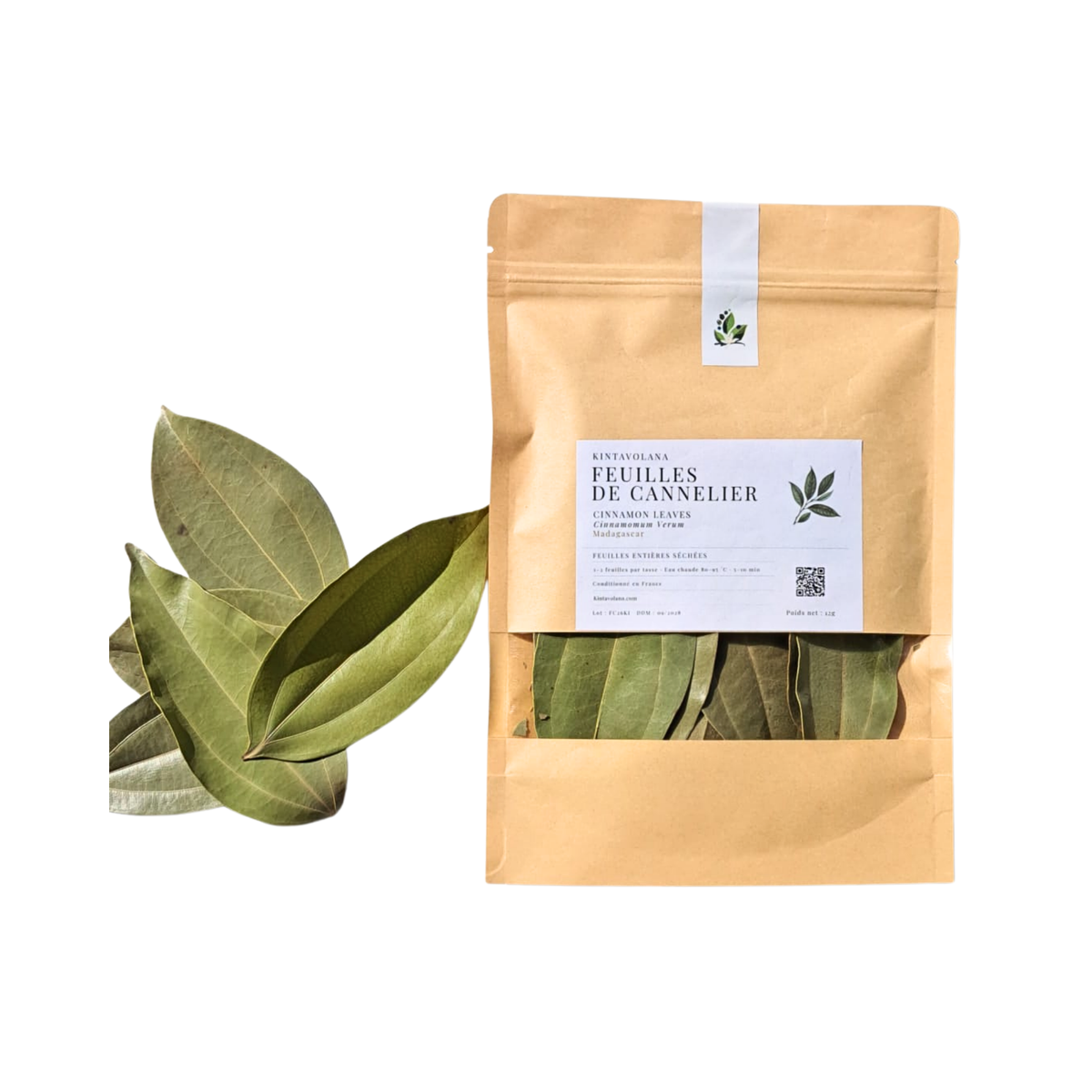
Cinnamon leaf and cinnamon: what is the difference?
The cinnamon we know best is the bark of the cinnamon tree. But the same tree, Cinnamomum verum, also produces aromatic leaves.
And their profile is different.
The bark develops the sweet, warm and instantly recognisable scent we associate with cinnamon. The leaf keeps a spicy character, but with a more herbaceous, more clove-like dimension.
It should therefore not be seen simply as a lighter version of a cinnamon stick: it is another part of the same tree, with its own character.
How to use cinnamon leaves?
As an infusion
Lightly crumple or break the leaves, pour over simmering water and leave to infuse, covered, for about 5 to 10 minutes before straining.
The infusion gradually develops its herbaceous and spicy notes. The time can be adjusted to the intensity you want.
In cooking
The cinnamon leaf can also be used whole as an aromatic leaf.
Add it to a broth, a curry, a slow-cooked dish or rice, let it release its scent during cooking, then remove it before serving.
It can also be used in some sweet preparations where you want a spicy note different from that of the bark.
What does cinnamon leaf taste like?
If you know cinnamon sticks or ground cinnamon well, the leaf may surprise you.
Its profile is less sweet and less directly “cinnamon” than the bark. There is a spicy warmth, but with a herbaceous character and a note that can recall clove.
It is precisely this difference that makes it interesting: it sits somewhere between an aromatic leaf and a spice.
One spice, several parts of the tree
The cinnamon tree is a good example of what we like to show at Kintavolana: a plant is not always limited to the part we know best.
Its bark has become a universal spice. Its leaves remain much less known in Europe, even though they too have an aromatic character and culinary uses of their own.
Offering them whole lets you discover the cinnamon tree differently: no longer only through its bark, but through another material from the same tree.
The traditional uses and history of the cinnamon tree will be explored separately in our Journal.
Recognising a cinnamon leaf
Cinnamon leaves are elongated to oval, with a tapering tip and clearly visible veins.
Once dried, they become more brittle and their colour can range from greenish-brown to brown.
We offer them whole. Their size, shape and colour can therefore naturally vary from one leaf to another.
Frequently asked questions
Is cinnamon leaf the same as cinnamon?
It comes from the same tree, but it is not the same part. The cinnamon commonly used as sticks or powder is the bark of the cinnamon tree. Here, it is its dried leaves.
Do cinnamon leaves taste like cinnamon?
Not exactly. Their profile is more herbaceous and less sweet than the bark, with warm, spicy notes that can recall clove.
How do you make a cinnamon leaf infusion?
Lightly crumple the leaves, pour over simmering water and leave to infuse, covered, for about 5 to 10 minutes before straining.
How do you use cinnamon leaves in cooking?
They can be added whole to broths, curries, slow-cooked dishes or rice, then removed before serving.
Can cinnamon leaf be used like a bay leaf?
Its use in cooking can be similar: you can let a whole leaf flavour a dish during cooking and then remove it. Its taste is different, however: warmer and spicier.